How Assisted Living Communities Can Encourage Seniors to Stay Physically Active
It’s a quiet afternoon, and your mother is in her favorite chair with a cup of tea. She says she’ll go for a walk later. Later turns into tomorrow, and tomorrow turns into next week. Nothing dramatic happened. She had just gotten comfortable, and the chair became a little harder to leave.
If that sounds familiar, you’re not alone. Many older adults slowly move less over time. Sometimes it’s a health scare. Sometimes it’s a long stretch of bad weather, or a loss of confidence after a fall. Whatever the reason, the longer the break lasts, the more intimidating it feels to start again.
The good news is that a thoughtful assisted living community can make that first step feel a lot smaller.
Why Movement Matters More Than You Might Think
Staying active isn’t about running marathons or lifting heavy weights. For seniors, it’s about keeping the body ready for everyday life: getting out of a chair, walking to the dining room, reaching for something on a shelf, or picking up a grandchild’s drawing off the floor.
Regular movement can help with balance, flexibility, and strength. It can also lift your mood and make it easier to sleep. Just as important, it keeps people connected to others. A walk with a neighbor or a stretch class with friends feeds the spirit as much as the body.
None of this requires intense effort. Small, steady movements, done most days, add up.
Starting Small Is Perfectly Fine
For a senior restarting exercise after months or even years, the hardest part is often the beginning. There can be worries about pain, embarrassment, or simply not knowing where to start.
Good communities understand this. Instead of handing someone a rigid plan, staff often begin with a friendly conversation. What did you enjoy doing years ago? What feels comfortable now? What would you like to be able to do again?
From there, the goals can be modest. Five minutes of gentle stretching. A short walk down the hall. A few seated leg lifts while watching the morning news. Those little wins build confidence, and confidence is often what keeps people going.
Gentle Classes That Welcome Everyone
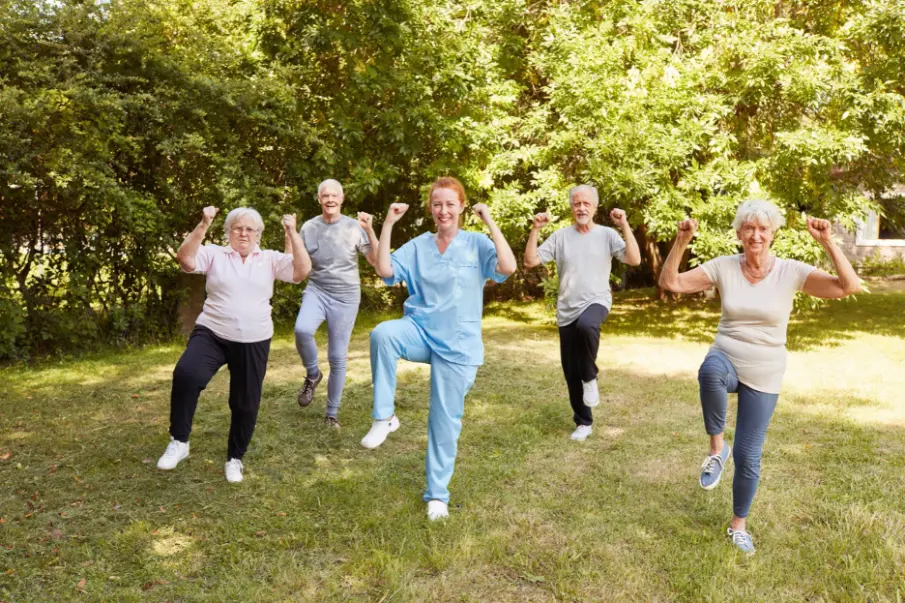
Group exercise classes are one of the easiest ways to ease into a routine. Chair yoga, tai chi, light stretching, and low-impact strength sessions are common in assisted living, and they’re designed with real bodies in mind.
The best classes share a few qualities:
- Seated options for anyone who feels unsteady
- Slow, clear instructions that are easy to follow
- Permission to rest whenever needed
- A relaxed atmosphere where no one is being compared to anyone else
When a class feels friendly instead of competitive, people tend to come back. Many even look forward to it.
Walking Programs That Feel Like Outings
Walking is simple and familiar, and it doesn’t require special equipment. Many communities organize walking groups that stroll the grounds, circle a courtyard, or follow a loop through the hallways on rainy days.
What makes these programs work is the company. A walk is easier to start when a friend is waiting for you. Some communities add a little fun, like noticing the flowers along the path, counting birds, or ending with a cup of coffee on the patio.
Handrails, benches along the route, and non-slip flooring also help. Knowing there’s a place to sit makes it easier to say yes.
Gardening, Dancing, and Other Everyday Joys
Not all exercise looks like exercise. Some of the best movement happens when people are simply doing something they love.
Gardening is a good example. Watering plants, pulling a few weeds, or tending a raised flower bed involves bending, reaching, and gripping, all at a comfortable pace. Raised beds make it accessible for people who use walkers or wheelchairs.
Dancing is another favorite. A sing-along with a little swaying, a seated dance session, or a social with music from the old days gets people moving without anyone calling it a workout. Even tapping toes and clapping hands counts.
Other ideas that work well include:
- Light games like balloon volleyball or ring toss
- Simple stretching before meals
- Helping set tables or arrange activity rooms
- Short group walks to mailboxes or common areas.
The Role of Caring, Encouraging Staff
Staff members can make a huge difference. A kind invitation often works better than any schedule on a bulletin board. Something like, “We’re heading out for a short walk. Want to join us?” feels warm and low-pressure.
Good caregivers also pay attention. They notice who seems hesitant, who lights up around music, and who needs a little extra help getting started. They adjust activities to accommodate different abilities, offering a seated option, a slower pace, or a shorter session. They celebrate effort rather than results.
And they never push. If someone isn’t ready today, that’s okay. The invitation stays open for tomorrow.
Making the Environment Part of the Solution
The setting matters, too. Well-lit hallways, clear walking paths, comfortable seating areas, and easy-to-reach activity spaces all nudge people toward moving more. Even small touches help, such as a sunny spot with chairs where residents can do light stretches together.
When movement is built into the daily rhythm, it stops feeling like a special event. A walk to the dining room, a stop at the garden, and a few songs in the lounge all count.
How You Can Support Your Loved One
If you have a parent or loved one in assisted living, your encouragement matters. Ask what activities they enjoy. Join them for a class or a walk when you visit. Praise their small steps, and avoid pressure or comparisons.
It’s also wise to check with their doctor or the care team before starting anything new, so activities stay safe and comfortable.
Movement as a Part of Life, Not a Chore
Staying active in assisted living doesn’t have to feel like another item on a to-do list. It can be a laugh during a stretching class, a stroll in the sunshine with a friend, or a few songs in the afternoon.
Every bit of movement counts, even on slow days. With patient support, friendly company, and activities that fit each person, being active can simply become part of a good day. And that’s something everyone can feel good about.
More to Read:



Previous Posts: